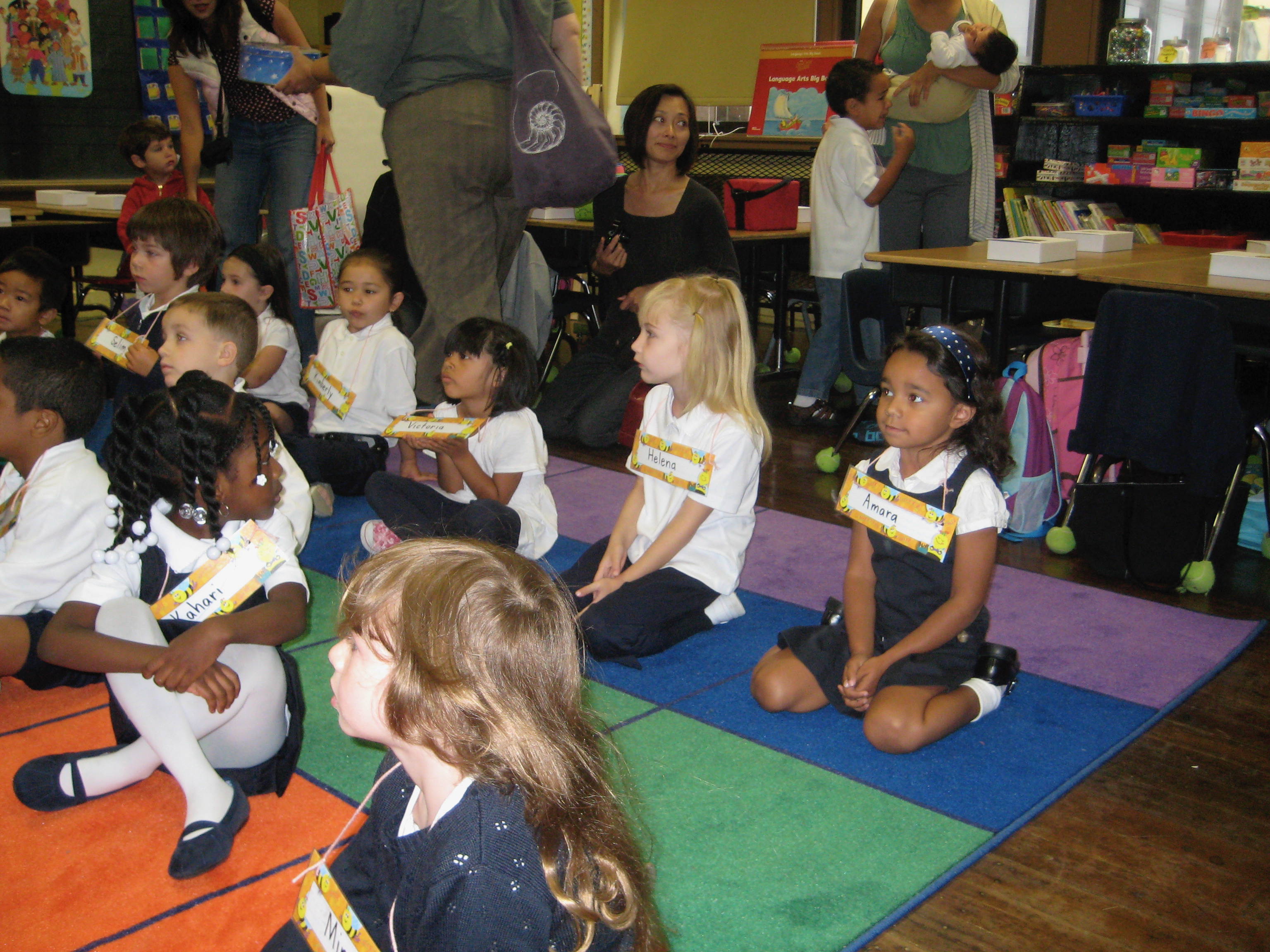
Oakland and Berkeley are 20 minutes apart, but crossing between them always meant stepping into a different kind of classroom.
After dropping my brothers and I off at our respective public schools, my dad would merge onto the freeway and drive north to Berkeley, where he taught physical education and Advancement Via Individual Determination, or AVID — a program that prepares students for college and beyond — in a district that paid him enough to make the commute worth it.
My brothers and I stayed behind.
We went to Oakland public schools my whole life. Without them, I wouldn’t be who I am today. But even then, even at 8 or 9 years old, I noticed things. What stood out to me the most were the differences between after-school programs.
There were two after-school programs at my elementary school. My parents paid for one called Adventure Time; it was held in a large portable and featured toys, games, computers, various events and a kind of low hum of abundance. The free program was in a smaller portable next to ours, and contained a couple of games and not much else. Students in Adventure Time would go inside our larger portable and sit at the long cafeteria tables as the supervisors took roll, and then we would line up for free snacks. At the same time, we would see students in the other after-school program sitting on the hot blacktop just outside.
The divide between the programs was, in hindsight, almost perfectly racial. I was confused in the wordless way children intuit things before they can name them. At the same time, my own social experiences were leading me into my personal discovery of being Black.
Oakland Unified School District was always sorting us. This gap never closed and the division was never hidden. I was assigned to attend a particular school based on my ZIP code, and the borders of that ZIP code had been shaped by decades of policies designed to keep Black families and families of color on one side of a line. And the resources followed that line, not the kids.
As a young Black girl, I started to recognize the ways I was pushed and moved between worlds. I recognized that there was something about which kids ended up in which room that felt wrong, and I was close enough to both sides of that line to feel its weight.
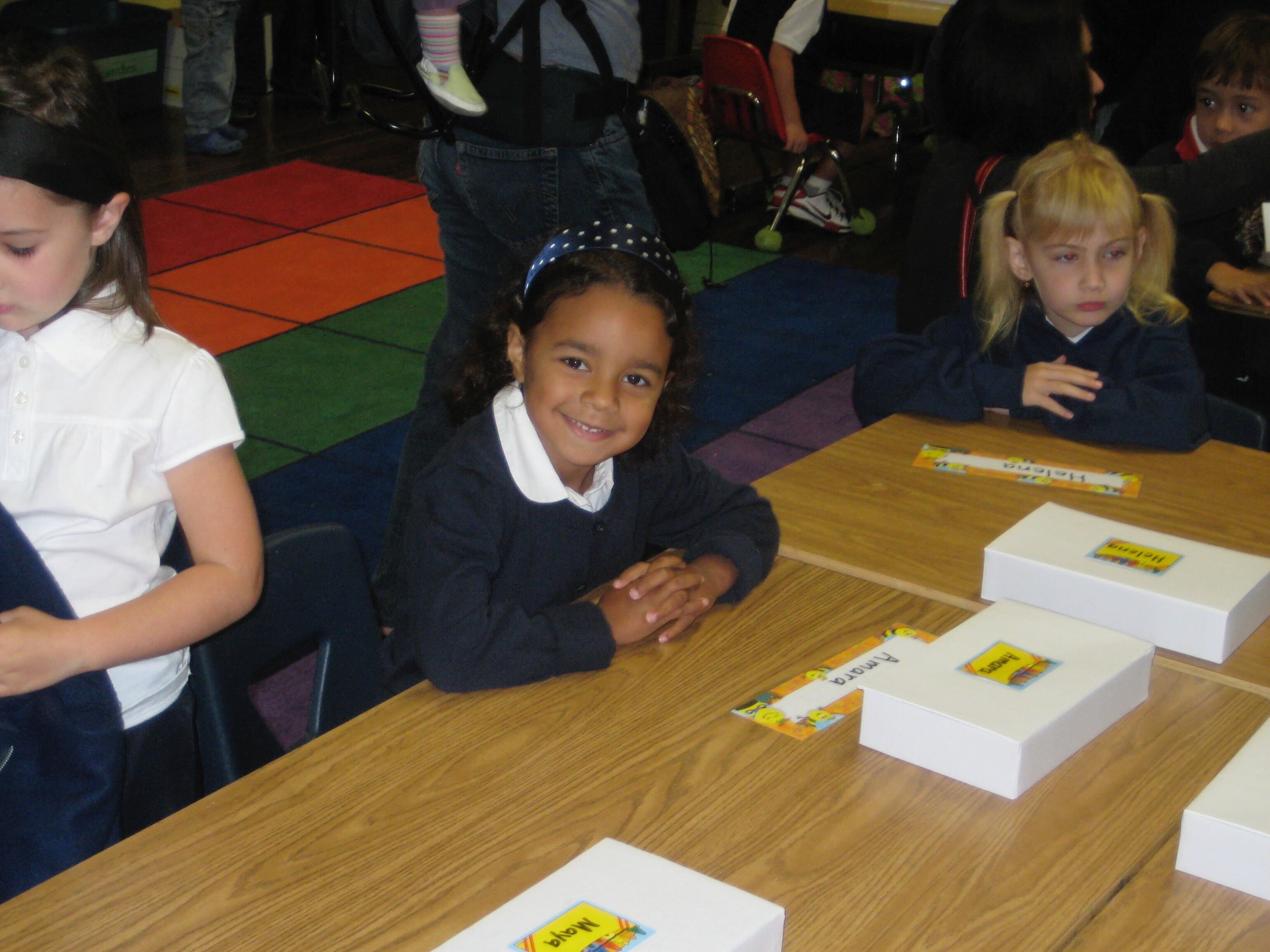
By high school, the cracks were impossible to ignore. I remember a particular instance in which a classmate asked for paper and my freshman English teacher announced that the class had no paper. No pens. No pencils. We had Chromebooks, technically, but there are things you need in a classroom that a Chromebook cannot replace, and a teacher who has to open class by apologizing for what he doesn’t have has already lost something he shouldn’t have had to lose.
Teachers went on strike — and I understood why, because my father, being a passionate teacher and union advocate himself, had taught me to understand, even as the disruptions piled up.
Students at my high school came from such varying socioeconomic circumstances that the most important thing for them was survival and a degree. They relied on school for necessities such as after-school care, meals and counseling; they relied on a school that couldn’t even provide teachers with paper.
I’d seen this version of OUSD before. I think back to being 8 years old, standing between two portables wondering why one had so much more than the other.
Meanwhile, my dad made his way back across the East Bay to pick up me and my brothers and to wrap us in a wholesome embrace that closed the distance between the two cities.
His students were mostly Black and Brown kids, too. So when I asked my dad why our schools, despite being full of students who looked like me, were so different, his answer stayed with me. His district had money. His schools had supplies. AVID existed there because someone had decided it should, and funded it, and given my dad the room to teach it well. He taught me to see and understand inequality and to fight it.
Berkeley High School was very white. My high school was not. The programs Berkeley High had — the classes, the electives, the resources — were things we didn’t have. It was something I understood as systemic, the result of policies, not chance. In Oakland, students are assigned to high schools through a lottery system shaped by neighborhood and ZIP code, while Berkeley has a single comprehensive high school and made an effort to integrate elementary and middle schools decades ago.
It is an exhausting thing, to go to a school that feels like it’s running on fumes, where you can feel, every day, the limits of what you’re being given.
My teachers tried their hardest, but at the end of the day they were trained to teach, not to fill all the gaps everything else a flawed system failed to. My dad was a dedicated teacher, and Berkeley gave him the infrastructure to actually do that work. My teachers had the same instincts and nowhere near the same support.
Seeing the toll teaching took on my dad allowed me to recognize how my teachers showed up for us even when the system gave them almost nothing to work with. Some of them changed my life in ways I’m still discovering. But I also remember the frustration of being a student who wanted a diverse, intentional and challenging education, and feeling like I wasn’t getting it.
I knew that I had to push to get into schools with resources, with prestige, with the infrastructure that Oakland had not been able to give us. I eventually found myself, ironically, at UC Berkeley — off to the university in the city my dad drove to every day.
The city line my dad crossed every morning, I’ve now crossed too, in my own way, but I carry Oakland with me.
I think about the people I grew up with. Each on a different path, a path whose difference has less to do with who they are or what they deserve and more to do with the socioeconomic systems that drew lines around all of us before we were old enough to walk to school.
So many of my peers deserve to be sitting in one of the top public universities in the country exactly as much as I do — a truth I realized as an 8-year-old in the larger portable, trying to figure out why the one next door was smaller.