
Everyone I speak to says dating today sucks. No one wants to be judged by their appearance and no one wants to admit they do the judging. Our dating apps, with their picture-first design, only seem to encourage this surface-level approach.
Ditto AI hopes to change that. I got the elevator pitch while crammed into the back of a black Mercedes overflowing with seven boys in suits and ties and a fruit platter placed precariously in the middle of us. One of them was Allen Wang who, alongside Eric Liu, co-founded Ditto AI, a dating service that claims to run a thousand “simulations,” find your perfect match and even plan your perfect date. Since Ditto AI’s founding in 2023, Wang and Liu are now flush with $1.6 million in seed capital, an absurd amount of which went toward the event we were headed to: A yacht party in which Ditto would be really put to the test.
Ditto hopes to fix dating by introducing controlled structure. Instead of swiping through possible matches yourself, an AI algorithm does the picking for you and texts you when it’s found a match. This text includes some photos of your hopeful and an already-chosen date idea based on the information both people shared about themselves. If all seems copacetic, you would fill out what times you were free and Ditto would cross reference it with your partner and boom, there’s your date. The first time you actually speak to your match is in person, which is sort of the point for Wang and Liu.
The yacht idea is really a compressed version of Ditto AI. Posters went up everywhere advertising a speed dating yacht party with a QR code to apply. From these applicants, a lucky 100 were selected: 50 boys, seemingly mainly chosen from UC Berkeley’s LinkedIn world, and 50 girls, some of whom it seemed were personally invited. Each one of these lovebirds was matched to another across the aisle using Ditto AI’s special algorithm. As they entered the yacht, they were handed a wooden tag with a number from 1 to 50 that corresponded to an identical tag held by their selected partner. These numbers were kept secret until everyone was on board, the possibility for escape had been left behind on shore and the signal came to find your partner: “Look at your number and f---ing find them!”
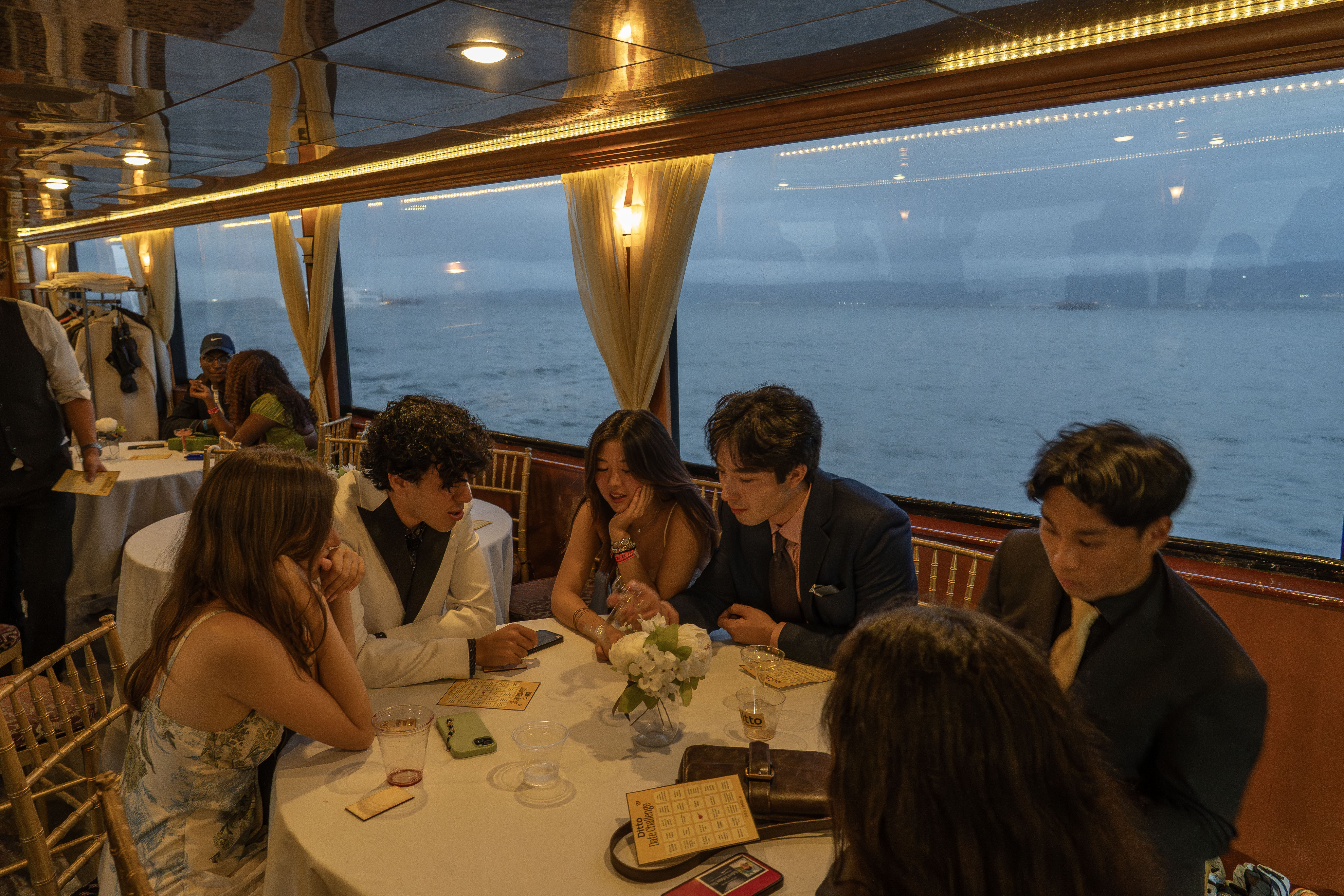
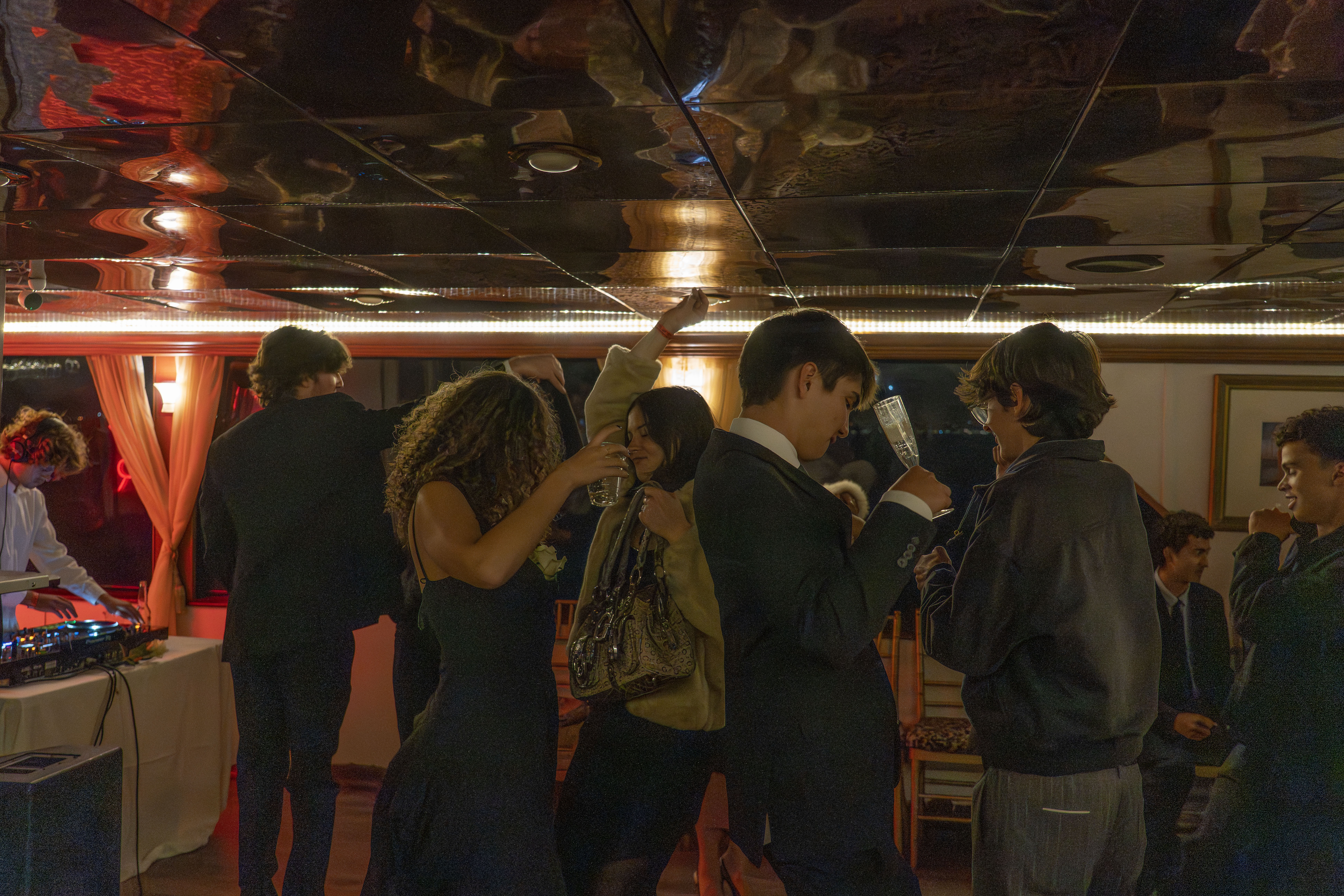
Picture a room, slightly larger than a coffee shop, lit in a warm orange reflected everywhere by a mirrored ceiling, filled with more than a hundred people. Now make that room rock quite viciously because we were, mind you, in the midst of some sort of minor storm, and you would have a mental image of this circus. People took different approaches. Some began to shout their numbers to no avail. Others held their tags up over their faces and walked around as if they were advertisements. Eventually, everyone found their predestined one.
As I sat and watched, this began to feel like a culmination of all that is Gen-Z dating. The internet’s great promise was that it would bring us together by collapsing space and time. In many ways it has but in most, it hasn’t. Dating seems to have taken one of the biggest hits. Can AI fulfill this vaunted promise, or will it plunge us even further into isolation?
By the end of the night, what had begun as various homogenous clumps of men or women had split into pairs seated in chairs a respectful distance away from each other. Attendees I interviewed afterwards were split on whether or not most people ended up sticking with their assigned match. But what is true is that I have never seen this many new couples together by the end of a party. Undoubtedly, this was something unique.
I am not sure if it’s entirely attributable to Ditto AI’s computing, though no doubt some credit is deserved there too. What I think was actually effective is, bluntly: They help us offload our free will. Choice is hard, and the truth is that we would often rather avoid it. Ditto’s model of selecting for you, even down to the content of your date — and in the specific case of this yacht, bringing you onto a boat where you have no choice but to mingle — means you have almost no exposure to decision at any step along the way.
This sounds bad, and it might have some consequences for our decision making in the long term, but at the same time, Wang and Liu did it. They did what seems so elusive that every major publication has already published a think piece on its impossibility. They got Gen-Z to have sex and even, maybe, to make love. For that, perhaps anything is worth it.